miércoles, 1 de julio de 2026

 The Blueprint of Tomorrow: From 3D Bioprinting and Synthetic Food to some kind of Chiral Reality


When 3D printing first broke into the mainstream, it felt like a neat trick—a way to manufacture plastic trinkets, prototypes, or tabletop miniatures. Fast forward to today, and we are witnessing a paradigm shift. Additive manufacturing is no longer about plastics; it is about rewriting the rules of biology, culinary science, and perhaps even the fabric of our physical infrastructure.

Looking at recent scientific literature, the true scope of this technology becomes mind-blowing. Two fascinating papers showcase exactly where we are heading: one focusing on the medical frontier, and the other on how we feed a changing world.

Replicating Life: Extrusion-Based Bioprinting

The first paper, published in Advanced Healthcare Materials and hosted on PMC (PMC5954828), explores "Recent Advances in Extrusion-Based 3D Printing for Biomedical Applications." This review zeroes in on tissue engineering, diving deep into how scientists use cell-free scaffolds and cell-laden "bioinks" to mimic natural tissues.


The technical complexity here is staggering. Extrusion-based bioprinting forces hydrogels encapsulated with living cells through a micro-nozzle. The challenge isn't just making a shape; it’s keeping the cells alive during the pressure of extrusion (cell viability) and ensuring the final structure maintains its shape (rheological properties). The paper highlights a massive leap forward: multi-material extrusion, which allows scientists to print complex tissue interfaces (like where bone meets tendon). While material limitations and standardization across different printer platforms remain a hurdle, we are actively building the foundation to print fully functional, patient-specific organs.

Disruption on the Plate: Emerging Advancements in 3D Food Printing

On the other side of the spectrum, a 2025 study from Frontiers in Food Science and Technology (10.3389/frfst.2025.1607449) tackles a different kind of survival: nutrition. "Emerging advancements in 3D food printing" shifts the focus to food safety, quality control, and customized nutrition.

Food printing isn't just a gimmick for futuristic restaurants. Scientifically, it involves manipulating the texture, micro-structure, and nutrient density of ingredients. The paper outlines how advanced extrusion and precision layering allow the creation of tailored meals for individuals with specific dietary restrictions (such as elderly patients with swallowing difficulties) or the fortification of foods with precise macronutrients. By controlling low-temperature preservation and structural stability, 3D food printing is moving away from novelty shapes and heading toward solving food security and sustainability issues on a global scale.

Bridging the Gap: The Chiral Network and Death Stranding (yes, I'm mentioning it again)

For anyone who has played Hideo Kojima’s sci-fi masterpiece, Death Stranding, this rapidly evolving reality hits a bit close to home. In the game, a fractured society relies on Porters to connect isolated knots/cities to the Chiral Network (think of it as a very futuristic Internet). Once connected, these hubs use "Chiral Printers" to materialize complex machinery, bridges, weapons, and supplies instantly out of thin air, utilizing localized matter and chiralium.

Looking at the trajectory of multi-material bioprinting and synthetic food processing, we are practically building a real-world version of this network. The ability to send a digital blueprint across a network and perfectly manifest an intricate, biological, or chemical structure on the other side of the world—without needing a traditional supply chain—is exactly what these research papers are aiming for. We are moving toward a future where localized printers can synthesize medicine or food on-demand in remote areas, getting us close to a vision of a society stitched together by immediate, decentralized manufacturing.

Where Do We Go From Here?

In my view, the future of 3D printing is tightly bound to material science and AI integration. Right now, our biggest bottleneck is the physical limit of our inks—whether they are biocompatible hydrogels or food pastes. As machine learning begins to predict the behavior of these materials under pressure and temperature shifts, we will see a massive leap in printing speed and precision.

Eventually, 3D printers will stop being standalone appliances on a desk. They will become integrated bio-reactors in hospitals and automated chefs in our kitchens. The line between "manufacturing" an object and "growing" or "cooking" it is blurring. We are no longer just printing shapes; we are printing functionality, life, and sustenance.


References:
Ozbolat, I. T., Hospodiuk, M., & Dey, M. (2018). Recent advances in extrusion-based 3D printing for biomedical applications. Advanced Healthcare Materials, 7(11), 1701426. https://pmc.ncbi.nlm.nih.gov/articles/PMC5954828/

Frontiers in Food Science and Technology. (2025). Emerging advancements in 3D food printing. Frontiers in Food Science and Technology, 5, Artículo 1607449. https://www.frontiersin.org/journals/food-science-and-technology/articles/10.3389/frfst.2025.1607449/full


miércoles, 1 de abril de 2026

Analyse Artistique


Nogami Saeko

Tsukasa Hojo

- Fait à la plume


- Couverture d'un manga des années 80 intitulé City Hunter (Nicky Larson), représentant l'un de ses personnages, Saeko Nogami (Hélène Lamberti)

Cette illustration, datant de l'époque du City Hunter, est un témoignage frappant du style distinctif de Tsukasa Hojo. Son trait est si réaliste pour les années 80 qu'on aurait pu croire qu'il photographiait plutôt qu'il ne dessinait. Ce souci du détail, notamment dans la texture des collants et le froissé de la chemise, donne une impression de relief et de mouvement qui contribue au dynamisme de l'œuvre. Le contraste entre le noir et blanc accentue la dramaticité de la pose et souligne l'esthétique "film noir" qui a marqué la série.


Il est indéniable que Hojo avait un goût prononcé pour la forme féminine, et cette illustration en est un exemple éloquent. Si son œuvre a connu un tel succès en France, où elle est connue sous le titre de Nicky Larson, c'est en grande partie grâce à ce talent pour dépeindre la beauté féminine avec un réalisme à la fois sensuel et élégant. La pose provocante mais pleine de caractère de Saeko (l'équivalent de Hélène dans la version française) traduit la dualité du personnage : à la fois femme fatale et battante.


Cependant, il convient de noter certains aspects plus nuancés. Bien que le style de Hojo soit presque parfait, il ancre strictement son œuvre dans cette époque révolue, avec des coiffures et des vêtements typiques des années 80. Si vous cherchiez un anime au style plus contemporain, vous seriez déçu par cette esthétique rétro. De plus, son sens de l'humour, souvent grivois, peut être perçu comme daté et sexiste par certains spectateurs, ce qui a pu l'aliéner d'un certain public.


Néanmoins, l'impact de Hojo sur l'industrie de l'anime et manga est indéniable. Si vous aviez pu voir cette illustration à l'époque, vous auriez été frappé par son originalité et son audace. Il est fort possible que, sans cette œuvre, l'anime tel que nous le connaissons aujourd'hui aurait été bien différent.


L'évolution du style de Hojo : Le style de Hojo a évolué au cours de sa carrière, devenant de plus en plus réaliste et détaillé.

L'influence de Hojo sur d'autres artistes : De nombreux artistes d'anime ont été influencés par le style de Hojo, notamment Masakazu Katsura (Video Girl Ai).


Références

Zona Negativa. (2020, 19 de marzo). City Hunter, de HŌJŌ Tsukasa.


sábado, 26 de octubre de 2024

Introduction to the Yakuza videogame series

The Yakuza series or as it is now known, to us because of old translation issues, Like a Dragon is a series of videogames that started back in 2005 on the Playstation 2. 


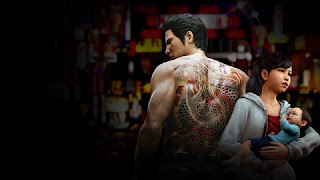
It follows for the most part the protagonist Kazuma Kiryu as he tries to live some semblance of a life, as he goes into, leaves, returns, fights and traverse the japanese underworld. It has a lot of colorful characters, mostly criminals, that show us in their own way that you can be a good person even if you are surrounded by evil and tragedy.


Here i will present a brief summary of each game, avoiding major spoilers but as the games are serialized the beginning of the next one can ruin the surprise of the previous one, so just take that into account. Hopefully this will make you want to try one or if possible all of them, have fun.


Yakuza (Like a Dragon) 1 - 2005  (Remake: Kiwami - 2016)

10 years had passed and Kazuma Kiryu the Dragon of Dojima, just got released from prison for killing his own boss, having being expelled from his Yakuza clan, because it is a serious crime even for them, he now needs to reconect with all his friends and family because a huge conspiracy is on its way, one that could change what happened or rather recontextualize what happened in the past.


Yakuza (Like a Dragon) 2 - 2006 (Remake: Kiwami 2 - 2017)

A year had passed since the incident in 2005, and now Kiryu is living with his not-official daughter Haruka peacefully for once. But trouble comes again when a powerful new force from an old enemy join forces with another ancient enemy and they are trying to disrupt the peace that everyone is trying to achieve. So now Kiryu needs to return so he can help his friends and he can rest easy once again.


Yakuza (Like a Dragon) 3 - 2009

3 years later, Kiryu, now taking care of an orphanage with Haruka, has trouble again when now an even bigger conspiracy than in the first one involving the Japanese government, the United States and his own ex-clan are coming after his orphanage and are threatening his new family. With new and old friends reuniting this, funnier and weirdly tropical, adventure will begin.


Yakuza (Like a Dragon) 4 - 2010

A money lender who charges no interest named Shun Akiyama starts his day as any other, but a seemingly little incident starts a chain reaction that will have huge ramifications even recontextualize the past (again!!), he is joined by Taiga Saejima, a prison fugitive, Masayoshi Tanimura, a "corrupt" cop and a certain Dragon that have returned because he sense something that can affect everyone involved.


Yakuza (Like a Dragon) 5 - 2012

Some years have passed and now Kiryu is a Taxi Driver named Taichi Suzuki in another city, he sees Haruka on TV and gets upset, and you have to question what happened, where is the orphanage and why everyone looks so miserable. But trouble rises again (you have to get used to the big conspiracies), joined again by Akiyama, Saejima, Haruka who became an idol, and a disgraced baseball player named Tatsuo Shinada, Kiryu has to get back to the world and do everything in his power to stop the threat and protect everyone even if it involves giving up his dreams.


Yakuza (Like a Dragon) 0 - 2015

This one takes place 20 years before the first one, it is a good entry point into the series despite having a lot of references to the other ones. Kazuma Kiryu, not even known as a Dragon, is trying to climb and become a big shot in the Yakuza, he really doesn't know that getting there (and much later getting out) is going to be incredibly difficult.


Yakuza (Like a Dragon) 6 - 2016

Kiryu is out of prison again now having washed away all of his crimes and it's finally ready to return to his normal life but oh no!! Haruka disappeared and went to Onomichi, which is in Hiroshima, and had an accident in Tokyo that left her comatose, she also has a baby with her. Kiryu with so many questions set out to Onomichi to get all the answers but, weirdly for this series, get involved in a conspiracy that doesn't involves him for once but he will resolve nonetheless.


Like a Dragon (Yakuza 7) - 2020

Kasuga Ichiban gets thrown in jail to cover for his Yakuza family captain's crime, what should have been a few years becomes 20 as something weird is happening inside the clan and when he gets out he discovers that the whole world not only in the technological sense has changed. He now needs to gather his strength and put himself in the, as he puts it, become the hero that (maybe even Japan) really needs.


Like a Dragon Infinite Wealth (Yakuza 8) - 2024

Having, presumably, saved Japan Ichiban puts down the hero cape and is finally living on the right side of the law, helping former yakuza back into society. But trouble appears again as he is framed for things that doesn't necessarily happened and his reputation as the Hero is destroyed. His former captain appears before him and shows him a shocking truth, Ichiban now on his way to Hawaii doesn't really knows what to expect but we do, some gigantic conspiracies that will keep us entertained for hours.


So that's it, I left out a couple of spinoff games that are not really necessary to understand what is happening in the main series because this list will be too long, this games are really fun and a lot more people should be able to enjoy them. Currently not every one of them are in Spanish, only 7 and 8, subtitles only, but if you have a good understanding of English and even Japanese for that matter you should check them out you will have a lot of fun and learn a lot about so many topics you haven't even considered.

Or if this is too much trouble you can also check the TV series that just came out.


References:

How to Play the Yakuza Games in Chronological Order - IGN - IGN Website 2020

Yakuza | Your Next Favorite - HyperBit Hero Youtube Channel

Yakuza 0 ha sido traducido al español por un fan y el parche ya está disponible - HobbyConsolas Website 219

Todo lo que necesitas saber de la serie Yakuza - IGN Website 2018

Juegos de Yakuza - 3DJuegos - 3DJuegos Website

(1) The Best Yakuza Game - A Yakuza 3 Analysis - YouTube - CurveNastyJr Youtube Channel


domingo, 31 de diciembre de 2017

Listos para el nuevo año

Para quien pensaba que no iba a haber ninguna Jingle Belle para este año, sorpresa, espero todos tengan un genial fin de año y estén listos para el que viene, porque viene con todo!!!